
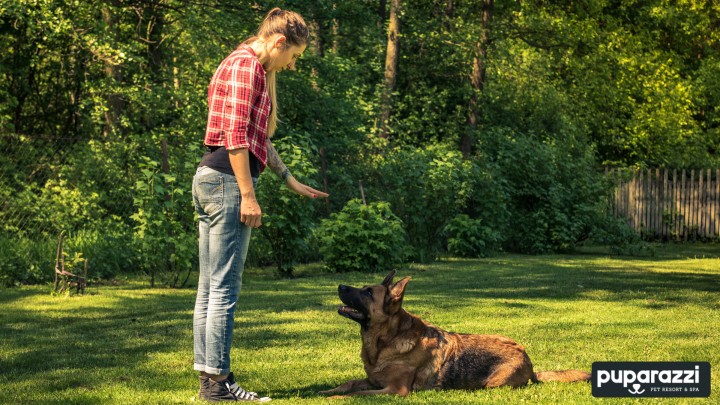
If you’ve searched “puppy training near me” for the third time this week, you’re in good company. Between LA traffic, long workdays, and a pup with big feelings, it’s tempting to send your dog to a dog boarding and training program and hope they come back “fixed.” The real question: is board-and-train actually faster—or do private lessons create results that stick at home?
Training isn’t just about your dog; it’s about the two of you learning a shared language. If all the learning happens away from you, your dog may listen beautifully to the pro—but forget the rules in your living room. On the other hand, trying to do everything yourself with weekly lessons can feel slow when you’re juggling work, kids, and the 405.
Let’s make the decision simple and tailored to Los Angeles life.
Option 1: Board-and-Train (aka “dog training camp,” “doggie boot camp”)
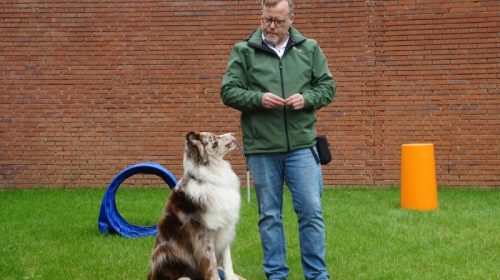
What it is: Your dog stays at a facility for 1–4 weeks (sometimes longer) and trains multiple times per day. People often search “dog board and train near me,” “dog boot camp near me,” or “board and train dog training near me.”
Best for:
- Time-crunched owners who want a structured reboot
- Puppies who need foundation skills fast
- Controlled practice for tough behaviors (impulse control, leash reactivity)
Pros
- Lots of quality reps in a distraction-managed environment
- Fewer chances to rehearse bad habits
- Good momentum builder for new skills
Cons
- Transfer is everything: without owner lessons, behaviors fade at home
- Methods vary: ask how stress is handled and which tools are used
- Aftercare required: plan on homework and follow-ups
Red flags: No owner lessons, no training videos, or blanket “guarantees” on complex behaviors.
You can also read: Is Dog Daycare the Right Choice for Your Puppy?
Option 2: Private Lessons (in-home or on-site)

What it is: You and your trainer meet weekly/biweekly to work on goals in real-life settings. Often searched as “obedience training for dogs near me,” “private dog trainers near me,” or “k9 training near me.”
Best for:
- Home-specific issues (door manners, guest greetings, apartment hallways)
- Dogs who stress in novel environments
- Families who want skills to last because they learn the mechanics
Pros
- Results generalize to your actual routines and spaces
- You learn the “why” and “how,” not just the cue words
- Usually more budget-friendly over time
Cons
- Fewer reps unless you practice between sessions
- Progress depends on your follow-through
Fast decision tool (choose in 2 minutes)
- Little time, many issues? Start with board-and-train, then commit to post-stay handler lessons.
- Problems at home? Go private lessons first.
- New puppy? Combine day-training/short camp for reps + weekly owner coaching.
- Budget-savvy? Private lessons, then a short boarding dog training tune-up if needed.
- Not sure? Blend both: a focused B&T block → 3–6 owner lessons to “transfer” skills.
What to ask any trainer
- Methods: reward-based? How do you reduce stress and prevent fallout?
- Transparency: unedited session clips, written plan, and progress notes?
- Transfer: how many owner lessons are included—during and after B&T?
- Real-world proof: results outside a quiet training room (sidewalks, patios, elevators).
- Fit: evaluation first—so your dog isn’t shoehorned into the wrong program.
Related searches to keep perspective: dog school, pet training near me, dog training camps, training camp for dogs, dog day care, k9 trainers. Names differ—quality and transfer plan matter most.
Real-world snapshots
- Maya (6-month doodle, West LA): 2-week board-and-train + four handler sessions. At home: loose-leash walks to a café, calmer greetings at the door. Maintained at 8-week check-in.
- Rocky (rescue terrier, Santa Monica): Weekly private lessons at home and on Montana Ave. Barking at passersby dropped within three weeks because practice happened where triggers actually live.
How to choose the right program in LA
- Transparent methods: reward-forward training, clear criteria, and stress-reduction plans.
- Owner coaching built in: 3–6 handler lessons after board-and-train to lock in transfer.
- Real-world practice: sessions on sidewalks, elevators, parks, and patio settings.
- Clarity you can follow: written homework, short recap videos, and measurable goals.
If you want to explore options, We offers multiple pathways—Private Lessons, Group, and Board-and-Train—so you don’t have to force the wrong fit.
Conclusion
Choosing between board-and-train and private lessons comes down to time, your dog’s temperament, and where the behavior shows up. Board-and-train delivers fast, structured reps; private lessons make skills stick in your real world. Many Los Angeles families do best with a short board-and-train followed by 3–6 owner-coaching sessions to transfer results. Either path works—consistency and handler follow-through are what make it last.
FAQ
Usually for initial skills, yes—because of daily reps. Long-term success depends on owner lessons and homework.
It sticks when you practice transfer steps in your spaces for 2–4 weeks after the stay.
Look for at least 2–4 handler lessons plus written homework and recap videos.
They’re often the same. Focus on the curriculum, methods, and aftercare—not the label.
Both work. Many LA families do a short camp for reps + weekly private lessons for generalization.
Want the simplest start?
Book with us for a tailored starter plan – daily exercises, a leash routine, and a home-ready transfer checklist. If it’s a fit, we’ll map your path with Board-and-Train, Private Lessons, Group Classes, and optional dog day care for structured social practice.
Social Share
-
Facebook
-
Twitter
-
Linkedin
-
Pinterest