
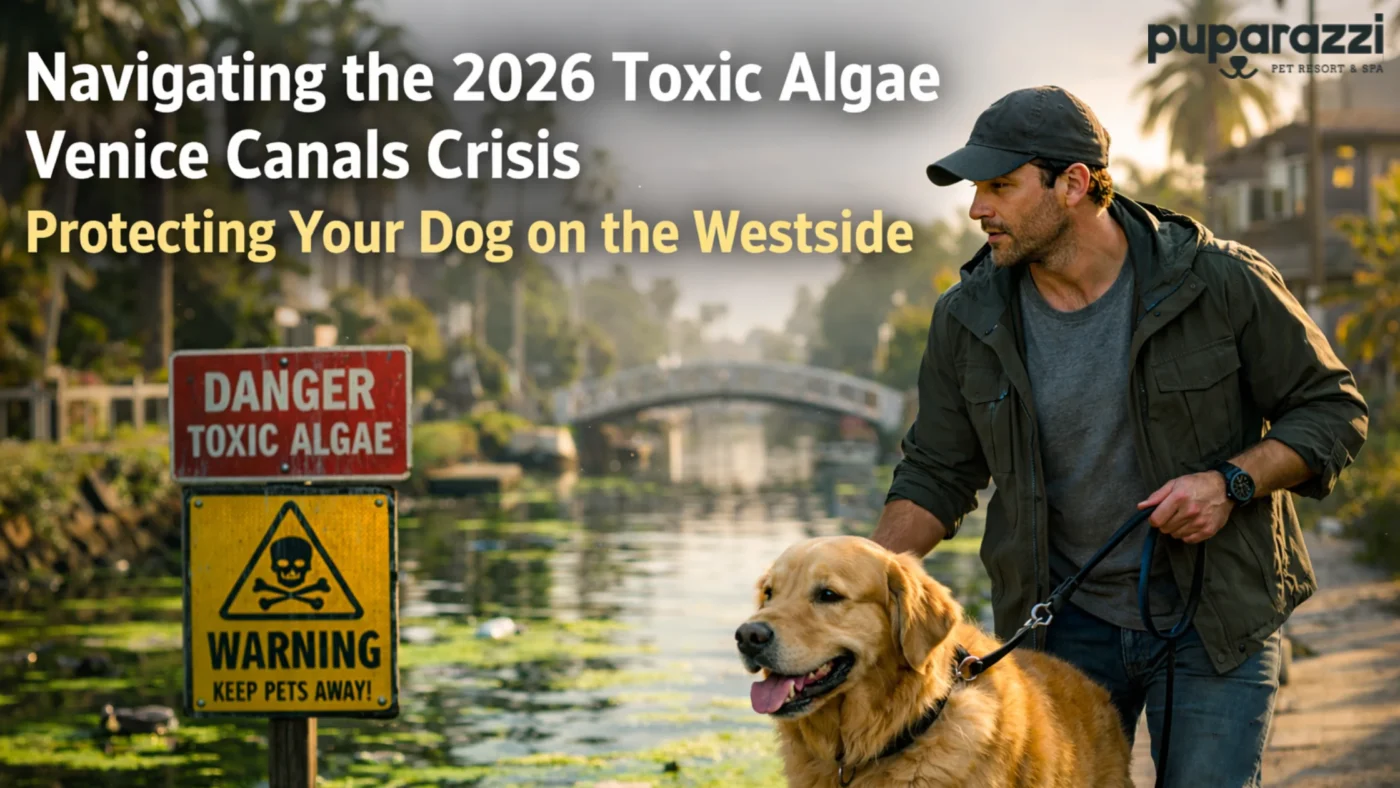
In recent years, the rise of Toxic algae Venice Canals has become a major concern for pet owners. With warmer temperatures, urban pollution, and stagnant water, the canals have turned into breeding grounds for harmful algae blooms.
For dog owners living in West Los Angeles, this issue is more than environmental—it is a serious health threat. Exposure to Venice Canals algae bloom can lead to severe illness and long-term complications in pets. This guide explains the risks, symptoms, and prevention methods to ensure Westside dog safety in 2026 and beyond.
Understanding Toxic Algae in Venice Canals
What Are Toxic Algae?
Toxic algae, also known as harmful algal blooms, are microscopic organisms that grow rapidly in polluted or warm water. These algae release dangerous toxins that turn canals into toxic water for dogs. Once present, these toxins can remain active for weeks, making water unsafe even after visible algae disappear.
Why Are Venice Canals at Risk?
The Venice Canals are highly vulnerable because of:
- Limited water circulation
- Fertilizer runoff
- Waste discharge
- Rising temperatures
These factors worsen Venice canals pollution, allowing algae to spread quickly.
Health Risks of Algae Exposure for Dogs
Algae Bloom Health Risks: Exposure to contaminated water leads to serious algae bloom health risks, including:
- Liver failure
- Neurological disorders
- Skin irritation
- Breathing problems
- Digestive infections
Even small amounts of exposure can be fatal.
Symptoms of Algae Poisoning in Dogs
Recognizing symptoms of algae poisoning in dogs early can save lives. Watch for:
- Vomiting
- Diarrhea
- Excessive drooling
- Weakness
- Seizures
- Loss of appetite
If symptoms appear, contact a veterinarian immediately.
Why Canal Water Is Unsafe for Dogs
Many pet owners assume canal water looks clean and harmless. However, toxic water for dogs often appears clear while containing invisible toxins. Dogs may ingest this water while drinking, licking fur, or playing near shorelines.
Dog Swimming Safety Concerns
Dog swimming safety is a major concern during bloom seasons. Swimming increases the risk of ingestion and skin exposure. This is why experts strongly discourage water activities in contaminated canals.
How to Protect Your Dog from Toxic Algae
Preventive Measures : To ensure proper dog protection near canals, follow these steps:
- Keep dogs on leashes near water
- Avoid canal pathways
- Carry fresh drinking water
- Clean paws after walks
- Monitor local advisories
Safe Outdoor Practices
Maintaining Westside LA dog water safety requires changing daily routines. Choose:
- Clean dog parks
- Inland walking trails
- Home play areas
- Indoor recreation centers
These steps reduce exposure to harmful algae for pets.
Environmental Impact and Pet Health
Pollution and Its Effects: The increase in Los Angeles canal algae reflects worsening urban pollution. Long-term exposure to pet health water contamination can weaken immune systems and increase disease risk.
Polluted waterways affect:
- Pets
- Wildlife
- Humans
- Tourism
Community Responsibility
Residents can help reduce Venice canals pollution by:
- Avoiding chemical fertilizers
- Reporting dumping
- Supporting clean-up programs
- Promoting awareness
Community action is essential for long-term safety.
Safe Alternatives for Dog Recreation
Pet-Safe Areas Near Venice
Instead of risky canals, explore pet-safe areas near Venice canals such as:
- Maintained dog parks
- Private yards
- Clean beaches
- Indoor play zones
These environments support healthy physical activity without risk.
Can Dogs Swim in Venice Canals?
Many owners ask, can dogs swim in Venice canals? The answer is no—especially during algae blooms. Swimming increases the chance of exposure and worsens harmful algae effects on pets.
Long-Term Solutions to Algae Growth
Environmental Programs Authorities are working to reduce toxic algae bloom Venice Beach 2026 through:
- Improved drainage systems
- Water filtration
- Pollution control
- Nutrient management
These efforts aim to restore water quality.
Role of Pet Owners
You can support dog safety near polluted waterways by:
- Staying informed
- Following safety alerts
- Sharing awareness
- Supporting environmental initiatives
Individual actions create lasting impact.
Conclusion
The rise of Toxic algae Venice Canals represents a serious threat to dogs living on the Westside. Increasing Venice Canals algae bloom activity makes awareness and prevention more important than ever. By understanding how to protect dogs from toxic algae, recognizing symptoms of algae poisoning in dogs, and avoiding toxic water for dogs, you can safeguard your pet’s health. Choose safer recreational spaces, stay updated on water conditions, and practice responsible pet care. These steps ensure long-term Westside dog safety and peace of mind for every pet owner.